As a male, the very mention of the word prostate has always induced a serious sense of apprehension in me, leading to me suffering from a strong degree of “ostrich syndrome” when it comes to the topic. I would rather bury my head in the sand, not learn or talk about it too much, and empathise while politely looking the other way when I hear about men who have been diagnosed with prostate cancer, lest I find out that I might somehow also be affected by this oft-mysterious little organ and its propensity for becoming cancerous.
This has meant that, for most of my 48 years on earth, I’ve known very little about the prostate; its location, its functions, its [mal]functions, and also how a diagnosis of prostate cancer can affect men’s mental health.
I hope that with this article, I’ve not only managed to pull my own head out of the sand and learned about the prostate, prostate cancer, and prostate cancer and mental health, but that along the way, I will persuade other men to do the same.
A very special word of thanks to David for his willingness to share his deeply personal experiences with prostate cancer, specifically how it impacted his mental health, with me during the writing of this article.
– Leon de Beer, SAFMH Deputy Director
THE “PROS”- WHAT…?
The word “prostate” is derived from a Greek expression meaning “one who stands before”. This describes the position of the prostate as viewed from below, where the urethra exits the gland, the prostate “stands before” the bladder.
The prostate is a gland that is approximately the size of a chestnut, weighs around 30 grams, and forms part of the internal male reproductive system. Its most important function is the production of a fluid that, along with sperm cells from the testicles and fluids produced by other glands, makes semen. The prostate is situated directly below the bladder and above the pelvic floor muscles.
The prostate normally enlarges after the age of 40, which is known as benign prostatic hyperplasia [BHP], or in layman’s terms, “an enlarged prostate”. This can lead to the gland growing from the size of a walnut to that of a lemon. BHP is, however, not cancerous, and it does not increase the risk of developing prostate cancer. It can lead to certain problematic symptoms, though, including blocking the flow of urine from the bladder. It may also lead to urinary tract, kidney, or bladder problems.
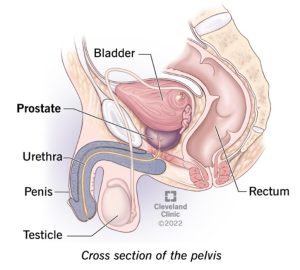
Source: https://my.clevelandclinic.org/health/body/23965-prostate
WHEN THINGS GO WRONG – PROSTATE CANCER
A friend of mine’s father died of prostate cancer, and I then made a point of it to get check-ups every year. During my check-up in 2024, the results showed that my prostate-specific antigen [PSA] levels had risen above the safe limit. My doctor told me that it could either be because of inflammation of the prostate, or it could be a sign of a cancerous growth. I was alarmed by hearing the prognosis, but because my PSA levels had been much lower the previous year, I convinced myself that it was only an infection. I think denial is often the first survival mechanism that is triggered, and it was the same with me. I denied the possibility of cancer. The fact that the doctor did not outright say that it was cancer and that it could just be inflammation left the door open for hope, and that is what I clung to”.
Prostate cancer, which starts in the prostate gland, normally grows slowly, and many men affected by this don’t need treatment immediately. However, some types of prostate cancer can spread quickly, and these are also more difficult to treat. Early diagnosis is important as it improves the chances of long-term survival.
Apart from skin cancer, prostate cancer is the most common type of cancer in men from the United States. After lung cancer, prostate cancer is also the second-leading cause of cancer deaths in American men, with roughly one in 44 men losing their lives to prostate cancer.
Prostate cancer is serious, and it is common. In fact, it is the most common form of male cancer globally and in South Africa, and it is showing significant increases. Out of every 100 males, 13 will develop prostate cancer at some point in their lives. In South Africa, the lifetime risk for prostate cancer is 1 in 15, based on figures from the 2022 National Cancer Registry. Luckily, most men are diagnosed before it spreads beyond the prostate gland, and if prostate cancer is treated at this stage, it can often be eliminated.
The second survival mechanism we humans use in order to stay positive is the idea that ‘it will not happen to me’. I had to convince myself that I would be okay and that it would only be inflammation. But that nagging thought was still there, and I could feel my stress levels rising as the date for the biopsy came closer. On the day of the biopsy, we met with the specialist, and he told me that there was good and bad news. The bad news was that there was a cancerous growth in my prostate, but that the PSA levels were not so high that he would suggest removing the prostate. The good news was that it was treatable! My heart still sank as he said the word ‘cancer’ though, and I thought to myself: ‘how can there be good news if you have cancer?’ Was I just supposed to take my medicine and wait to see if it helped?! I was angry; angry at the doctor, angry at the cancer, but I said to myself: ‘I will fight this. It is not going to beat me.”
Local and international research has shown that the risk of aggressive prostate cancer is higher in Black males, and that it tends to run in families. It is therefore important that men know their family’s ‘cancer history’, specifically where there has been breast or prostate cancer in a first-degree relative.
When asked what advice David would give other men who have been diagnosed with prostate cancer, he says the following:
Firstly, get all the facts about your diagnosis and treatment plan from your doctor or medical specialist. Remember that your loved ones will also be in shock and will need time to adapt to your diagnosis. Give them space to work through their own emotions. Establish an open line of communication with your inner circle; be vulnerable and share your innermost feelings and fears, and allow them to do the same. Get professional help, see a therapist or psychologist to walk you through the process and assist you with constructively formulating your feelings. They will also be able to give you advice and teach you coping skills”.
SYMPTOMS OF PROSTATE CANCER
In the early stages of prostate cancer, men may display no symptoms. However, later on, symptoms may include:
- Frequent urination, especially at night.
- Interrupted or weak urinary stream.
- A burning or painful sensation when urinating.
- Trouble starting or stopping urination.
- Loss of bladder control.
- Loss of bowel control.
- Erectile dysfunction.
- Blood in semen or urine.
Advanced cancer can cause deep pain in the hips, upper thighs, or lower back.
CAUSES AND RISK FACTORS
Experts are uncertain about what precisely causes cells in the prostate to become cancerous. Similar to other types of cancer, prostate cancer develops when cells divide more rapidly than usual, and while normal cells eventually die, the cancer cells do not. Instead, cancer cells multiply and form a tumour, which is a mass of tissue. As cells continue multiplying, parts of the tumour can break off and spread to other parts of the body [they ‘metastasize’]. Fortunately, prostate cancer typically grows slowly, and most tumours are diagnosed before the cancer begins to spread beyond the prostate. Prostate cancer can be effectively treated at this stage.
There are, however, risk factors for prostate cancer that should be noted:
- Ethnicity and race: persons of Black or African ancestry have a higher risk of developing prostate cancer, specifically aggressive cancers.
- Age: the risk for prostate cancer increases as men get older [they are more likely to be diagnosed over the age of 50]. Approximately 60% of prostate cancers occur in men over the age of 65.
- Being obese or overweight.
- Dietary factors: men can lower their risk of developing prostate cancer by eating a healthy diet, which includes lots of vegetables and fruit, and limiting the amount of red meat and high-fat dairy products they eat.
- Family history: men are two to three times more likely to develop prostate cancer if a close family member has had it.
- Genetics: men face a greater risk if they have Lynch syndrome. As cells grow in the body and produce new cells as part of their lifecycles, they make copies of their DNA; however, sometimes these copies have errors. But our bodies have sets of genes that contain instructions for seeking out such errors and repairing them. Healthcare professionals call these genes “mismatch repair genes”. A person with Lynch syndrome has mismatch repair genes that don’t work like they should. Men also face an increased risk of prostate cancer if they inherited mutated genes that are associated with an increased risk of breast cancer.
Some studies have identified other risk factors; however, the evidence for these is mixed:
- Smoking
- Having prostatitis [inflammation of the prostate gland].
- Sexually transmitted diseases.
- Exposure to Agent Orange [a chemical that was used during the Vietnam War].
PROSTATE CANCER AND MENTAL HEALTH
On my way home, as my wife and I discussed the prognosis, the uncertainty of what lay ahead forced me to think about factors that I had not considered before. What if the medication didn’t work? What if I suffered the same fate as my friend’s father? I went from feeling angry to feeling uncertain, which led to a feeling of desperation. My instincts told me that I needed to find a solution, to learn more about the disease, the dos and don’ts, the symptoms… And so the journey of research began, all to search for that glimmer of hope that I would be okay. I realised I needed an independent person to assist me, to be a sounding board, and to give me advice and encouragement. I contacted a psychologist to assist me with working through my feelings, to teach me coping skills, and to check in on me regularly”.
Prostate cancer can pose a serious challenge to men’s mental health throughout all stages of the illness, from diagnosis, surveillance, treatment, all the way to follow-up. The mental health implications of receiving a diagnosis of prostate cancer are being acknowledged more and more, and studies have found that a diagnosis of prostate cancer is associated with a higher risk of mental health conditions when compared to the general population [including the risk of suicide], and that providing long-term mental health support to men who are affected could help increase their life expectancy.
A diagnosis of, and living with prostate cancer, can affect a person’s thoughts, emotions and moods. A person might experience various emotions, and some may feel more intense than usual and more difficult to manage. Such emotions may include:
- Sadness.
- Frustration.
- Stress [it might be difficult to decide what treatment path to follow, which might cause stress].
- Anger, fear and shock [any or all of these things can be felt when men are informed that they have prostate cancer].
- Anxiety about the future.
Other emotions may include:
- Being unable to take in information.
- Feeling resentful.
- Feeling uncertain or frightened.
- Feeling numb.
- Feeling guilty.
- Experiencing loneliness [men might feel isolated, especially if their treatment has been completed and they are no longer seeing their medical team].
- Experiencing a loss or change in identity [men might say things like they are “less of a man” because of their treatment and diagnosis; some men might feel that their roles in the family have changed. For example, because they’ve had to stop working].
- Denial [if men feel well, they might struggle to accept the fact that they have prostate cancer].
- Disappointment and frustration [the way men think about themselves, their plans, and their lives may have changed].
- Worries about side effects [men who experience bowel, urinary or erection problems may struggle to cope with these and feel concerned or worried].
- A sense of loss [hormone therapy can bring about physical changes to men’s bodies; for example, weight gain, changes to their sex lives, and reduced physical strength, which might leave them feeling very different about their bodies, bringing about a sense of loss].
Men might experience all or some of these feelings, or they might feel completely different. They might feel a few at a time, or experience them all together, which can leave them feeling drained and exhausted. It is important to recognise that these feelings may also change from minute to minute, hourly, or daily. Under these circumstances, there is no ‘right’ or ‘wrong’ way to feel.
Anxiety and depression are two of the most common mental health conditions that people with cancer experience. These conditions are related to several psycho-physiological side effects that lead to increased periods of hospitalisation, poorer treatment outcomes, and higher mortality rates. Conditions such as anxiety and depression, along with related issues with body image, masculine self-esteem problems, and a fear of cancer recurrence, may also occur in men with prostate cancer. Anxiety and depression not only impact people’s quality of life; these conditions may also affect a person’s ability to actively participate in their treatment.
Anxiety
Feeling anxious at times is normal. Many men with prostate cancer experience symptoms of anxiety at some point. It can occur during diagnosis, treatment, or even after treatment has been finished. Anxiety can include feelings of unease, fear, worry, or dread, caused by, for example, needing to undergo certain treatments or procedures, such as biopsies. Research has shown that almost half of all people with cancer report feeling some anxiety, while approximately 25% of people with cancer report that they feel a great amount of anxiety. It is typical for a diagnosis of cancer to cause increased stress levels in those affected.
Anxiety does, however, feel different from one person to the next, and it may cause various physical and mental symptoms, which may include:
- Increased breathing and heart rate.
- Low mood or even depression.
- Feeling tense or nervous.
- Problems falling or staying asleep.
- Difficulty concentrating.
- Feeling restless.
Within the context of prostate cancer, anxiety is often triggered by feelings, thoughts, or events, such as:
- Fearing for your family or your financial situation.
- Worrying or fear about treatment, side effects, and appointments.
- Dealing with side effects of prostate cancer: for example, if a person has urinary problems after treatment, they may feel anxious about using public toilets. Hot flushes in public can also make a person feel self-conscious and may trigger anxiety.
- Concerns about the prostate cancer spreading or returning after treatment.
- A fear of dying.
Anxiety can have a big impact on a person’s relationships and daily life, which is why it is important that men talk about how they are feeling and that they open up about what is making them anxious, as this may help. Men should also reach out to their medical teams, who can help them answer questions and address worries about their treatment and diagnosis.
Depression
When a man has prostate cancer, they may feel down and sad at times. This could be when they have been diagnosed, during, or after their treatment. Everyone feels down at certain times in their lives, but if men experience feelings of irritability, sadness, or hopelessness most of the time, they could be dealing with depression. Men with side effects such as pain and fatigue, along with those who have been diagnosed with advanced prostate cancer, may be at higher risk of developing depression.
Certain side effects of treatment, including fatigue and a reduced sexual drive, may also affect men’s mood and increase their risk for depression. All treatments for prostate cancer carry potential side effects that may affect sexual functioning or the male sex drive, often very significantly. Men may have to deal with the prospect of and the reality of partial or total impotence. However, this is often temporary, and some treatments can effectively deal with these problems. Dealing with impotence [also known as ‘erectile dysfunction’] can cause a sense of loss, anxiety, and diminishing self-esteem, which in turn may affect their sexual relationships with their partners. Men may also start avoiding sexual activity with their partners because of being unable to achieve natural erections. It is, however, also important that men acknowledge that sexual activity is not the only way of showing love or experiencing physical closeness. If relationships are to remain satisfying for men and their partners, significant changes may need to be made in terms of behaviour, interactions and attitudes. Partners need to be open and comfortable about expressing fears, hopes, and desires, and should be willing to work towards resolving any potential differences in mutually respectful ways. Ultimately, many men continue to have satisfying sexual relationships with their partners after treatment, but it is important that they educate themselves about erectile dysfunction.
Men who had been diagnosed with depression in the past may also be at higher risk. Certain treatments for prostate cancer, such as chemotherapy and hormone therapy, may also increase the risk for depression. Apart from potentially causing anxiety, hormone therapy has several other potential side effects, including:
- Hot flashes.
- A loss of interest in sexual activity.
- Changes in blood lipids [these are fat-like substances found in body tissue and blood; the human body needs small amounts of lipids for it to function normally].
- Insulin resistance.
- Fractures to bones.
- Fatigue.
- A loss of bone density.
- A loss of physical strength and muscle mass.
- Weight gain.
- Gynecomastia [the growth of breast tissue, leading to enlarged breasts in men].
- Erectile dysfunction [previously outlined].
Hormone therapy can also make a person feel more down and emotional than normal, and can cause changes in a person’s mood [e.g. mood swings], for example, tearfulness, giving way to anger.
Depression can bring about various symptoms, which may negatively impact the person’s ability to carry out normal daily activities. Symptoms may include:
- Changes in a person’s appetite.
- Problems with sleeping.
- Losing interest in activities that were normally enjoyed.
- Not wanting to interact with or be around family and friends.
- Feeling irritable.
- Low mood.
- Hopelessness.
- Problems with memory.
- Problems with concentration.
- A loss of energy and fatigue.
Men should consult a medical practitioner if they experience symptoms of depression for most of the day, and if these symptoms don’t go away after two weeks.
The impact on my mental health was severe and very challenging. Men my age were brought up not to share our feelings; as the old saying goes, ‘cowboys don’t cry in front of their horses’. I think this mentality had the most negative effect on my mental health as I went through the process. The fact that I did not have the emotional vocabulary to express my feelings or to communicate them to those around me made it very difficult. I felt like a toddler who was learning to speak but was unable to say what they needed or what they meant. The fact that the feelings were building up inside me, but that I didn’t have the vocabulary to express them, led to so much frustration. This led to a feeling of powerlessness, and I became more agitated with those close to me. At the end of the day, there are no guarantees when it comes to cancer treatment, and that makes you very vulnerable and open to all sorts of suggestions, which can easily lead to depression or an overwhelming feeling of desperation”.
WHAT CAN MEN DO?
It is essential that men go easy on themselves and ensure that they are looking after their well-being during this time. There are many coping strategies, but not all might work for everyone. It is therefore important that men don’t feel defeated if they struggle to find ways to help them improve their sense of wellness. Men should realise that how they process their diagnosis emotionally is individual to them.
The following are some strategies that men can consider to assist them with supporting and improving their mental well-being while dealing with prostate cancer:
- Maintaining a healthy diet.
- Maintaining an exercise routine [even gentle walking can improve mood].
- Setting goals and focusing on things to look forward to.
- Taking time to do things they love, for example, gardening.
- Sharing how they feel with friends, family, or colleagues, or with trained professionals such as their medical team or a counsellor.
- Educating themselves about their treatment and the side effects thereof to help them prepare for it mentally [there are good interactive guides available online about managing side effects].
- Getting informed through:
- Liaising with their care team, including doctors.
- Reading articles and books.
- Consulting online resources [it is, however, important to seek out online information that is associated with accredited treatment facilities or endorsed by an organisation like the American Cancer Society, or other reputable cancer organisations, such as, in South Africa, CANSA].
- Taking time out to look after themselves; when feeling up to it, men can consider learning techniques to help them relax and manage stress, such as breathing exercises or simply listening to music.
Other strategies that men can consider to assist themselves include:
- Appointments. Some steps can be taken to assist with making this process easier for men mentally, for example, preparing a list of questions beforehand, taking someone with to also ask questions and take notes, keeping a calendar of all appointments, and making notes of goals they would like to achieve.
- During treatment, it is particularly important for a man to care for his mental well-being, as this can help him stay on track with his medical care plan, enhance his chances of recovery, and support him in maintaining a good quality of life before, during, and after treatment.
Handling a diagnosis of prostate cancer can be difficult, so it is vital that men get support from healthcare professionals and/or other persons or groups who can offer advice, based on their experiences of dealing with prostate cancer. People who can offer such support include:
- The person’s medical team. It is helpful to ask for key information about prostate cancer from someone like a nurse, a GP, a treating doctor, or someone else in the medical team. They can help inform men about their diagnosis, their treatment, and potential side effects. These individuals can also listen to men’s concerns and refer them to other people who might be able to assist.
- Trained counsellors. Psychotherapists and counsellors can assist men with choices, behaviours, and emotions and help them make positive changes to their lives. These professionals can provide objective, unbiased perspectives on men’s situations and help them process the reality of what is happening to them.
- Support groups. Talking to others who have also experienced prostate cancer and who understand what men are going through can be very reassuring. These groups can offer men spaces where they can talk about everything that is on their minds; the ‘ups’ and ‘downs’. Support groups have been shown to be helpful for both those with prostate cancer and their loved ones, during and after treatment. Research has shown the value of support groups in assisting with enhancing quality of life and possibly even prolonging life, and with assisting with decision-making. Support groups also provide the opportunity to hear about how other men made decisions regarding their treatment, their experiences with specific treatments, and how they coped with potential side effects. Support groups offer these same benefits for men who are dealing with a recurrence of cancer or whose initial treatments failed.
- Medication. If men experience depression, antidepressants may be helpful. GPs or other doctors can discuss these options with patients. However, before men start taking such medications, it is important to tell their GP, treating doctor, or nurse about any other medication or complementary therapies that are being used. It can sometimes take antidepressants a few weeks to start working, so while men wait to start feeling better, they can try other things like counselling or meditation.
David suggests that men should consider the following to strengthen their mental health after a diagnosis of prostate cancer:
Speak to your doctor and fully understand your diagnosis and the prognosis; get a clear picture of your treatment plan. There are negative side effects when it comes to treatment, so discuss this with your doctor and family in order for them to better understand what you are going through. Remember that they love you and will do anything to assist you in overcoming the disease. Do research, because we fear what we don’t understand. I found in my research that prostate cancer is the ‘best’ cancer you can get, because it is easily and successfully treatable when diagnosed early. Getting professional mental health help is the first thing to do. The therapist or psychologist is not emotionally involved, and therefore, they can give you a new perspective, provide advice and encouragement. Be willing to discuss and communicate your feelings, fears, and physical condition openly with your loved ones and your therapist. That is the only way for them to understand what you are going through, and that makes it easier for them to adjust and assist you with coping with the cancer. Most importantly, do not lose hope. Take it one day at a time, be kind to yourself and to those around you. Stick to your treatment plan even if it is hard…In the end, it’s worth it!
If you need support with cancer, the following two South African organisations can assist [note there are others too; a simple Google search will provide you with more options if needed]: