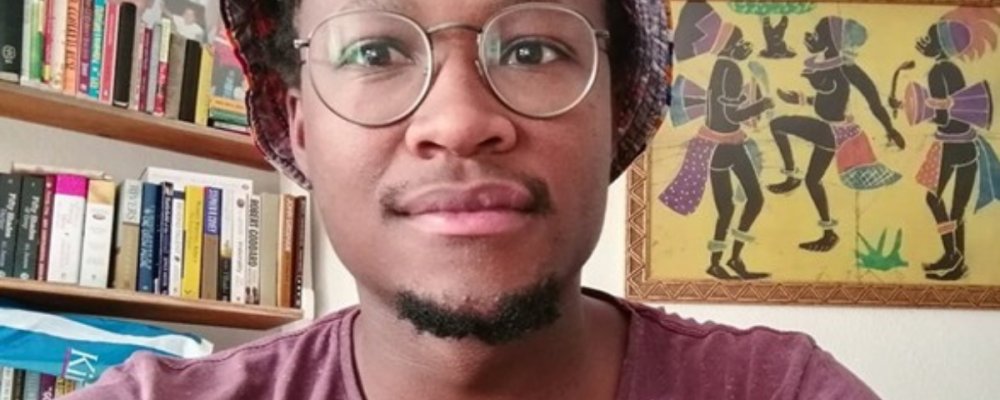
On Sunday, 26 May 2024, Lerato Moletsane’s son Tshidiso died by suicide. Lerato says:
I will never forget the call that shattered my life forever. It is two years now, and I don’t know who I am anymore”.
Tshidiso had been living with mental health problems and had been diagnosed with anxiety and severe depression. He sought help through medication and therapy, and he truly wanted to heal. When he stopped taking medication, he turned to other ways of coping, including walking 10,000 steps every other day, staying active, journaling, and writing. Lerato knew he was struggling, but she believed he was managing because he was open about his condition, had the courage to seek support, and was willing to take treatment.
After his death, many of his friends told Lerato that he never hid his depression. Although he did not often speak about it in depth, he was always there for others, checking in on them, supporting them, and wanting to know that they were okay. One friend shared that her greatest regret was never asking Tshidiso whether he was okay, even though he had so often asked about her well-being.
Tshidiso authored an award-winning novel, Junx, which was centred on his mental health struggles. Although it was fiction, around 70% of the story was drawn from his own experiences. Chair of the Fiction Award for the 2022 Sunday Times Literary Awards, Ekow Duker, said:
Junx by Tshidiso Moletsane stood out in a quadrant all on its own. It is an exceptional novel written in a style that is “in your face” and brutally honest.
Book editor, Cariona Ross, said:
When I read those first chapters I was sold: here was a unique voice, an unamed, unbelievably cool narrator leading us through a wild night in Joburg with honestly, intelligence and humour.”
Lerato first read the book when it was published in 2021, but after Tshidiso’s passing, and because he left no note, she felt compelled to read it again.
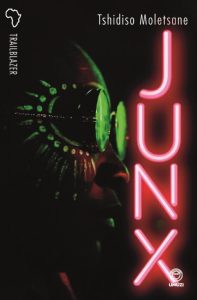
Reading Junx again helped her understand more deeply how difficult life had become for her son. Even so, she remains grateful that he reached out for help when he needed it. Lerato’s hope is that every man struggling with mental health challenges will feel able to speak openly and seek support.
Two of Lerato’s favourite quotes from Junx are:
I am balance. I am opalescent. All around me, instead of mere people, I see celestial bodies. I feel like we’re the centre of the universe. I exist and then I don’t and then I do again. I think I died. I want to die again. I want to die a thousand times.”
“I want the world to weep at my feet but I feel like it already has. I am some indefinite, amorphous liquid, but not like water or earth, more like ink or paint – not like something that exists in and of itself, not something absolute but something brought into existence. I am the stars. I am an entire constellation and you are too.”
In his memory, Lerato established a Foundation, Infiniti Mlenzi, named after Tshidiso’s pen name “Mlenzi”, which they launched on 23 May 2026 through movement-based activities; the same activities that helped Tshidiso through difficult times. The Foundation aims to provide an outlet for people, especially men, who are experiencing distress and feel they have no one to talk to. Lerato says:
I hope that my son’s life will become a beacon of hope for someone else”.
After Tshidiso’s death, Lerato found this in his notes and shared it in his eulogy:
Depression is pointless. Depression gets in the way of living. It beats down on you. I don’t want to be beaten down. I don’t want you to be beaten down”.
It is the SA Federation for Mental Health’s hope that Tshidiso’s legacy will live on in his words and in the work Lerato and her Foundation does.
We want to thank Lerato sincerely for sharing and trusting Tshidiso’s and her story with us.
Help is available. The National Suicide Crisis Line is 0800 567 567. This number is free, operates 24/7 and offers counselling in all 11 official languages.